

- Submissions centred on the topic of “Artificial Intelligence in the Euregio”
- Euregio Young Researchers Award goes to Ariele Zanfei for work on forecasting future water consumption in water supply networks
- Euregio Innovation Award goes to Waterjade Srl for software predicting water availability
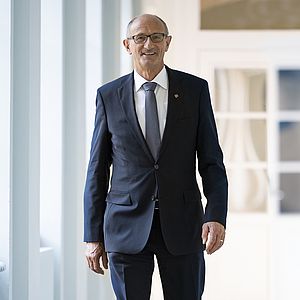
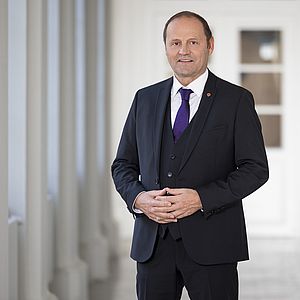
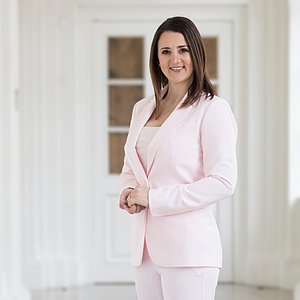
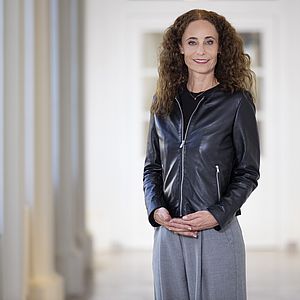
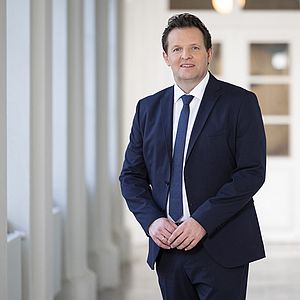
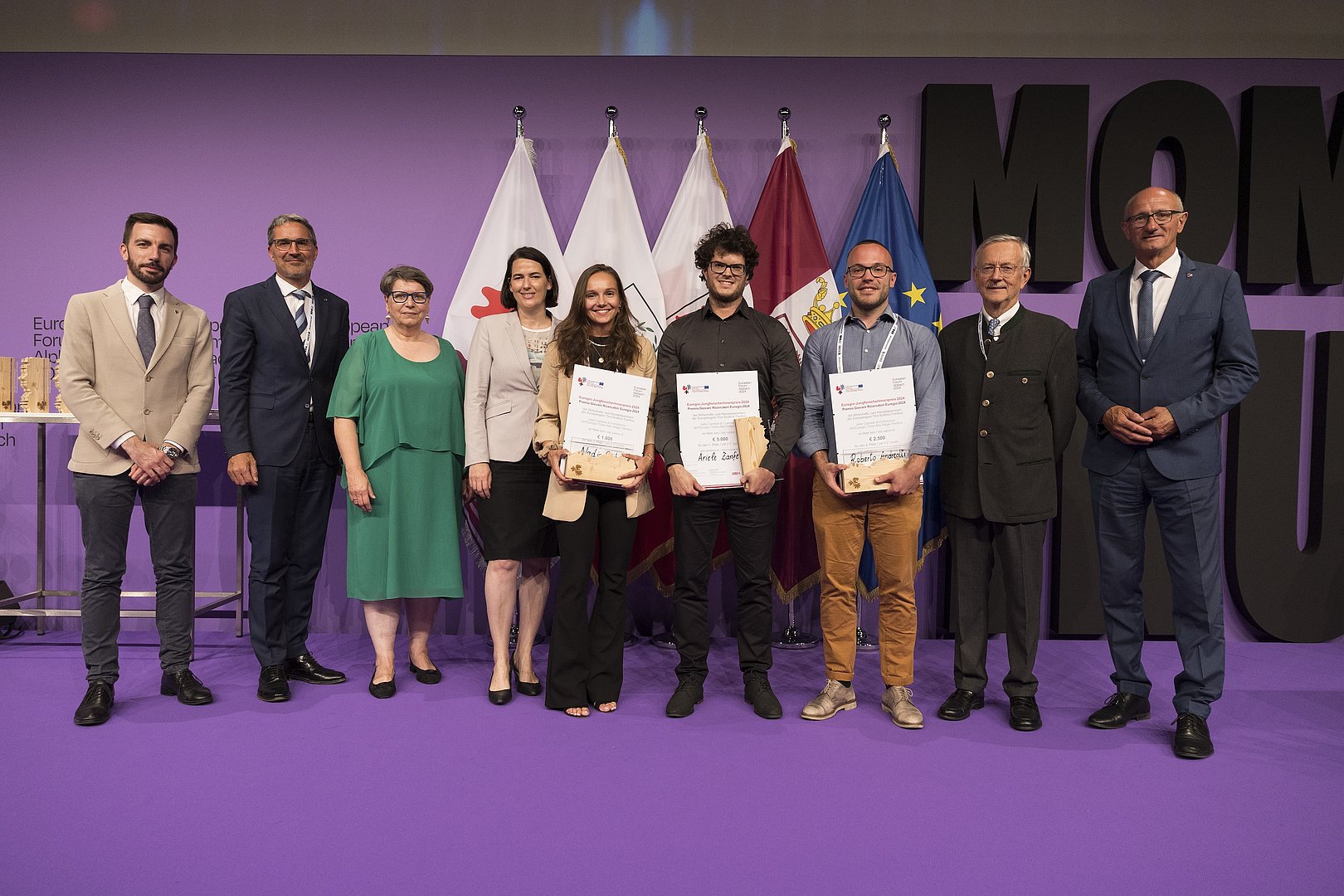
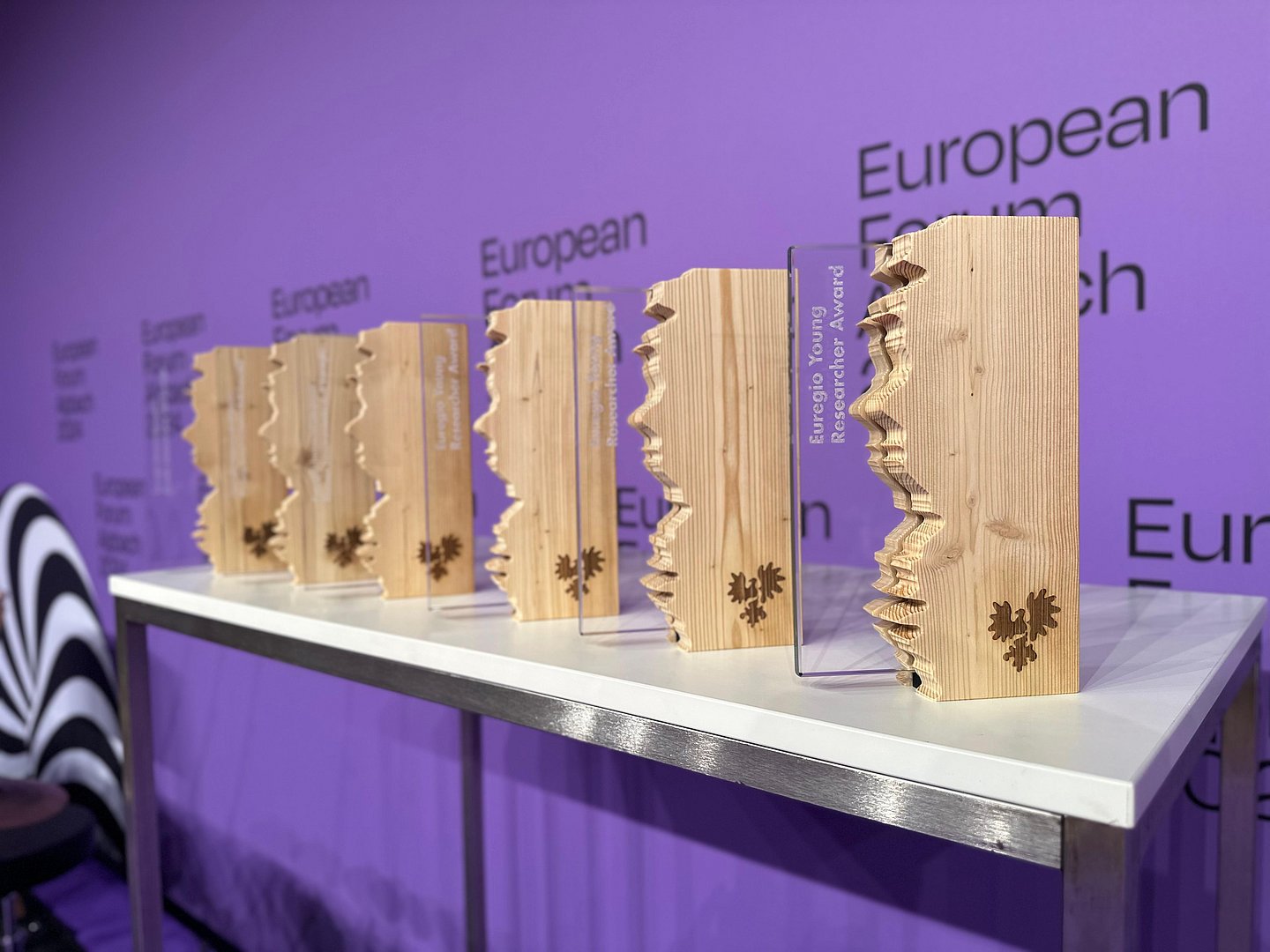
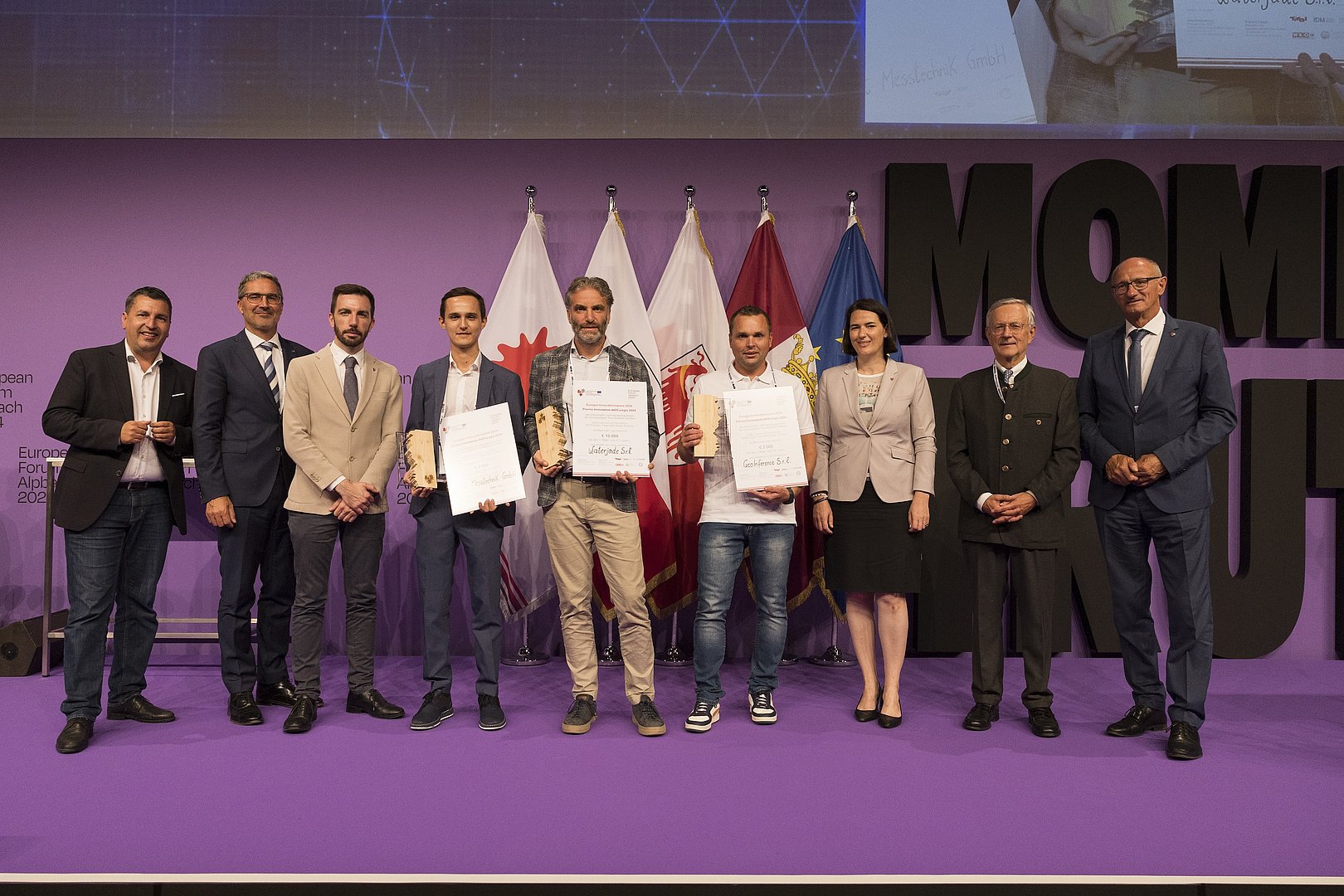
Artificial intelligence (AI) took centre stage at this year’s Euregio Awards (Euregio Young Researchers Award and Euregio Innovation Award). Young researchers as well as entrepreneurs and innovators from the Euregio Tyrol–South Tyrol–Trentino addressed the topic of “Artificial Intelligence in the Euregio”. The best research papers as well as product, process and service innovations were selected and honoured today, Saturday, during the Euregio Days at the European Forum Alpbach. The prizes, sponsored by the Tyrolean Chamber of Commerce and the chambers of commerce of Bolzano and Trento, were presented by president Barbara Thaler (Tyrol Chamber of Commerce) and president Michl Ebner (Chamber of Commerce Bolzano) in the presence of the Euregio President and Governor of South Tyrol, Arno Kompatscher, the Governor of Tyrol, Anton Mattle, and the Landesrat of Trentino, Simone Marchiori. “The Euregio Awards are far more than just a distinction. The submitted projects provide valuable ideas for the Euregio Tyrol–South Tyrol–Trentino. Through these awards, we bring young talent and innovative approaches into the spotlight, offering encouragement for further research and forward-looking projects. Particularly with regard to artificial intelligence, there are countless potential applications that can support us in many areas of life. At the same time, open questions remain, for example concerning ethics and AI labelling, which need to be clarified,” emphasised Governor Mattle.
Among the six finalists for the 13th Euregio Young Researchers Award, Ariele Zanfei from the Aiaqua Unibz spin-off prevailed with a study on forecasting future water consumption in water supply networks. Second place went to Roberto Andreotti from the University of Trento, while the third-best paper was submitted by Nadja Gruber from the University of Innsbruck.
In the Euregio Innovation Award category, the Trentino-based company Waterjade Srl impressed the jury. Second and third place went to Dibit Messtechnik GmbH from Tyrol and GeoInference Srl from Trentino.
Euregio Young Researchers Award
According to Michl Ebner, president of the Chamber of Commerce Bolzano, research makes a significant contribution to economic development through new ideas, technologies and strategies: “This is particularly true of artificial intelligence, which is gaining ground in an increasing number of fields.” For Barbara Thaler, president of the Tyrolean Chamber of Commerce, “scientific solutions are extremely valuable for companies in the Euregio. It is therefore our objective to endow the Young Researchers Award with appropriate prize money.” Barbara Thaler and Ulrike Tappeiner, president of the Free University of Bolzano, jointly highlighted the breadth of the research projects: “Topics ranging from sustainable water use and bridge stress tests to socio-cultural aspects were examined at a very high level.”
The Euregio Young Researchers Award carries prize money of 5,000, 2,500 and 1,000 Euros respectively for the top three places. In 2024, 44 researchers under the age of 35 applied. Applicants had to originate from the Euregio Tyrol–South Tyrol–Trentino or be active at a research institution within the Euregio. The research papers could stem from various scientific disciplines and address general aspects of artificial intelligence as well as ethical and administrative issues or selected fields of application such as mobility, education and care.
Euregio Innovation Award
“Innovation quite simply creates strength. It is therefore essential to promote innovation within the Euregio,” stated Barbara Thaler. Strengthening this development is the motivation behind the support of the Chambers of Commerce for the Innovation Award, added Michl Ebner. Marcus Hofer, chair of the jury and managing director of Standortagentur Tirol, is convinced that this objective has been achieved: “Not least the winning projects demonstrate that companies in the Euregio are not merely participating in this crucial future topic, but are at its very heart.”
Companies headquartered in the Euregio were eligible to submit products, services or applications through which they have advanced innovation in the field of artificial intelligence within their own company and/or for their customers. The three winning projects receive prize money of 10,000, 5,000 and 2,000 Euros respectively.
Brief description of the winning projects
Euregio Young Researchers Award
Ariele Zanfei, Developing AI-based methods to support a transition towards sustainable water management in Euregio
How can artificial intelligence support the transition to more sustainable water management? In Trentino–South Tyrol, there are significant challenges in water management, including ageing water supply networks and substantial water losses. During his research, Ariele Zanfei identified artificial intelligence as a potential key to a fundamental paradigm shift in water management. He studied AI systems in order to develop algorithms capable of saving water and enabling its more efficient use. This includes the development of algorithms to forecast future water consumption in aqueduct systems, the creation of digital twins of water supply networks, the real-time detection of leaks and pipe bursts, and further AI-based applications.
Euregio Innovation Award
Company Waterjade Srl, The Digital Twin of the Catchment area: a novel solution for the prediction of water resources
Waterjade Srl has developed an innovative software solution referred to as the “digital twin of the hydrological catchment area”. The software combines physically based models with artificial intelligence algorithms and enables forecasts of water availability for the coming days or weeks, depending on weather and climate conditions as well as industrial usage. Compared to other solutions, the distinguishing feature lies in the monitoring of the entire water cycle – from snow in the mountains to groundwater levels in the valley floor – with results characterised directly at the point of abstraction, such as a river, well or spring. This approach enables hydropower companies and integrated water utilities to optimise water management and to anticipate extreme events such as floods or droughts that may jeopardise business continuity.