


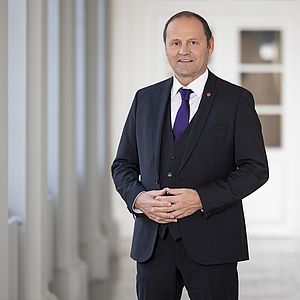
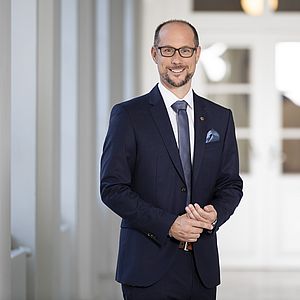


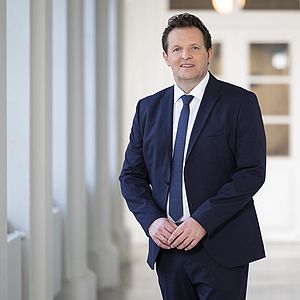
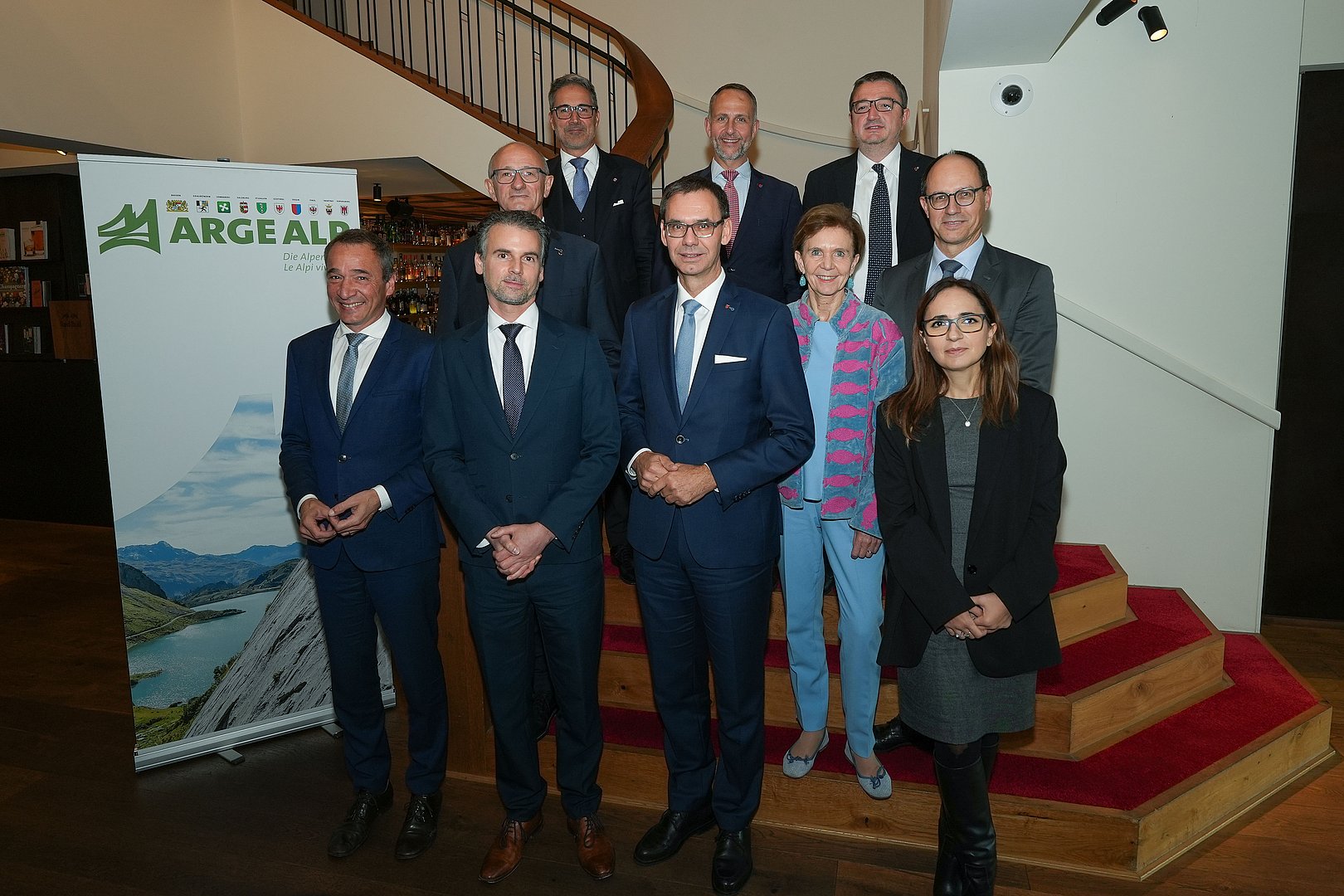
- Ten Regions at the Table: ARGE ALP Conference of Heads of Government in Vorarlberg
- Joint resolution on the energy transition: Expanding renewable energy and energy storage capacity in the Alpine regions
- Further topics: Resilient water supply, addressing natural hazards in spatial planning, mountain farming and cross-border wolf management
Cooperation between the Alpine countries continues. Following yesterday’s EUSALP Annual Forum in Lindau, Bavaria, the heads of government of the ARGE ALP regions met today in Bregenz, Vorarlberg. Founded in Mösern in 1972, ARGE ALP was the driving force behind the initial development of the EU Strategy for the Alpine Region, which eventually led to the establishment of EUSALP.
Today, ARGE ALP is a regional association comprising ten member regions, including Tyrol. On Friday, the 57th ARGE ALP Conference of Heads of Government took place. Key topics included the energy transition in the Alpine region and the initiative on wolf management launched by Tyrol.
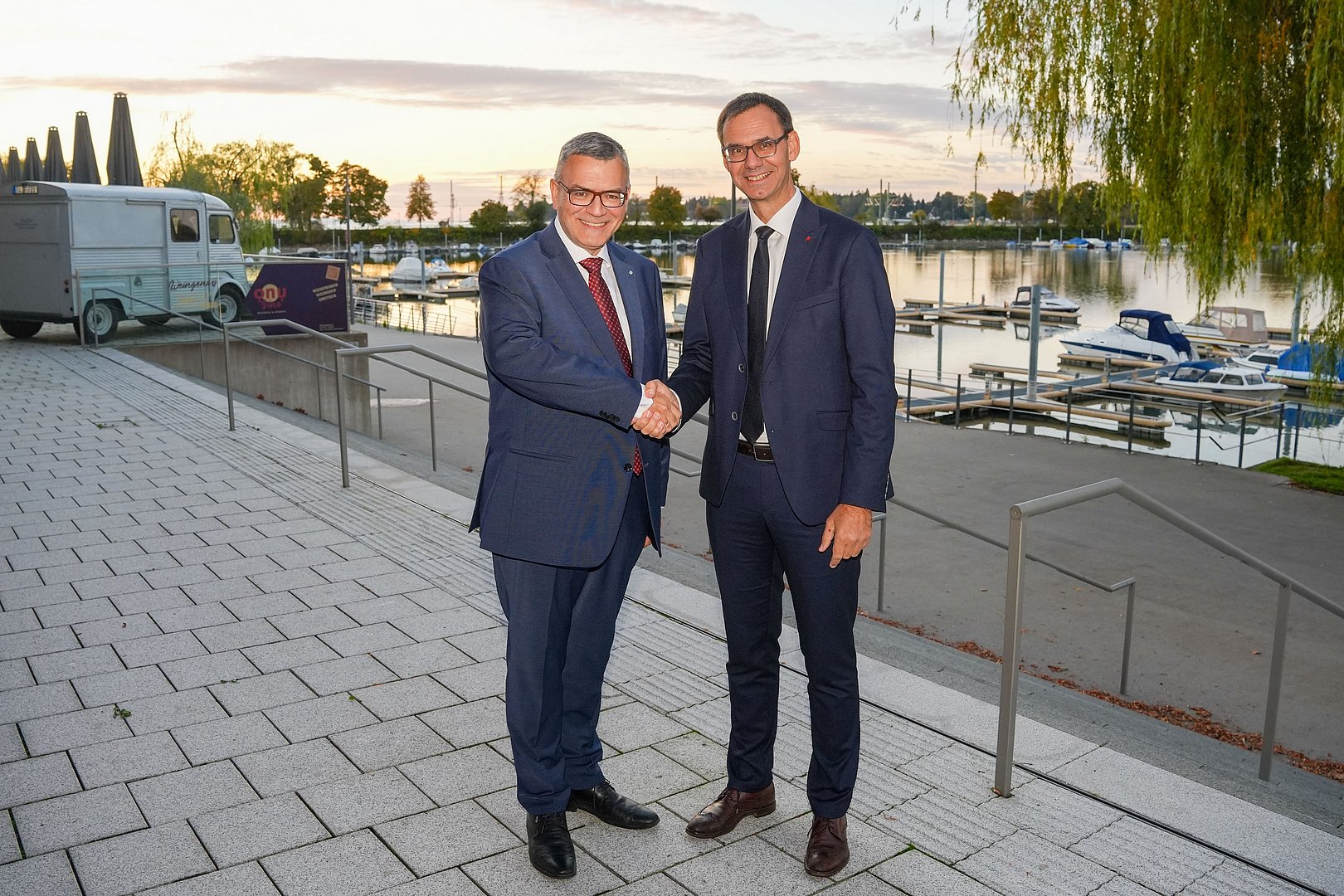
In a joint resolution, the ten member regions reaffirmed their commitment to boosting energy independence and accelerating the expansion of renewable energy. Other priorities included safeguarding water supplies and addressing natural hazards in spatial planning. During the conference, the chairmanship of ARGE ALP was also handed over from Vorarlberg to Bavaria.
More renewable energy, less dependence on fossil fuels
“Fossil fuels are the real drivers of price increases. That is why our own renewable and clean energy supply is central to our independence, competitiveness and prosperity. We in the Alpine countries, in particular, have considerable potential in hydropower, and we must make use of it. Our pumped-storage power plants can make an important contribution to a secure energy supply as Europe’s green batteries.Tyrol is consistently pursuing its goal of achieving energy autonomy by 2050. New compromises are needed to achieve our energy targets—including from those who advocate climate protection but obstruct hydropower,” said Governor Anton Mattle. He referred to the Tyrolean provincial government’s autumn retreat in Lienz in September, where the updated Tyrol 2050 energy target scenario was presented.
Under this scenario, domestic renewable energy production is to increase by 50 percent by 2050, while final energy consumption is to decrease by 30 percent compared with 2024 (see the press release dated 8 September 2026).
Through the resolution, the Alpine countries reaffirm their commitment to the climate targets of the EU and Switzerland and call for a faster expansion of renewable electricity generation, electricity and hydrogen networks, and additional energy storage capacity. At the same time, they advocate the gradual removal of incentives for fossil fuels and an energy transition that is socially balanced. The existing ARGE ALP Energy Forum is also to be further strengthened as a platform for cross-border cooperation.
Tyrol's Initiative: Cross-Border Wolf Management to continue
In 2022, ARGE ALP committed to cross-border wolf management at a meeting in Innsbruck. Among other measures, the member regions were tasked with exchanging and comparing data annually to monitor the development of large carnivore populations in the Alps and assess the effects of their presence on mountain farming and alpine pasture management.
This cooperation has also consistently been accompanied by calls to lower the wolf’s protection status under European law—a change the European Union has since implemented.
“We have worked for a long time to achieve a lower protection status. Through joint efforts, we ultimately succeeded in downgrading the wolf’s protection status from ‘strictly protected’ to ‘protected’. We have used the additional legalin dealing with wolves that pose a risk or cause damage to further develop Tyrol’s approach to the targeted removal of such wolves. .
We will continue to push for further changes at the European level, as our long-term goal is to allow wolves to be hunted under regular hunting regulations. Our priority is to protect grazing livestock and traditional alpine farming. Wolves do not recognise regional or national borders. Their management must not stop at those borders either. We need a sound data base at regional level, throughout Austria and through international exchanges. Cooperation within ARGE ALP is a key pillar of this effort. It helps us gain a better understanding of large carnivore populations in the Alpine region and coordinate the implementation of measures,” Governor Mattle explained.
In addition to the threat posed to livestock on alpine pastures, the governor also warned that wolves near residential areas can cause fear among local residents, a situation that must also be addressed.
Responsible Management of Water Resources and an Expert Network for Natural Hazards
In response to growing pressure on water resources, the Alpine regions adopted a further resolution committing themselves to measures, that will ensure access to a high-quality water supply in sufficient quantities and at reasonable prices for future generations.
At the same time, they emphasised that decisions regarding the use and protection of water resources must remain the responsibility of national, regional and local authorities.
The conference also presented the findings of a Tyrolean survey on risk-based spatial planning. Data from all ten ARGE ALP member regions had been collected and analysed. The results showed that the regions generally apply comparable planning approaches to flooding and other water-related natural hazards.
The cooperation has also established a cross-border network of experts. Continued exchange remains essential to benefit from the knowledge and experience of partner regions. Mountain Farming and Strengthening Regional Funding
The future of mountain farming and EU regional funding under the European Agricultural Fund for Rural Development (EAFRD) and the European Regional Development Fund (ERDF) from 2028 onwards were also discussed at the conference.
The Alpine countries are calling for adequate funding for agricultural support programmes, long-term security for mountain farming businesses and less bureaucracy.
Regarding future EU regional funding, they advocate giving regions a stronger say in how funding programmes are designed and how financial resources are allocated and used.
About ARGE ALP
The Alpine Regions Working Community (ARGE ALP) comprises ten member regions from four countries: the Austrian federal states of Tyrol, Salzburg and Vorarlberg; the German Free State of Bavaria; the Italian region of Lombardy and the autonomous provinces of South Tyrol and Trentino; and the Swiss cantons of Ticino, Graubünden and St. Gallen.
ARGE ALP was founded on 12 October 1972 in Mösern, Tyrol, at the initiative of Eduard Wallnöfer, the governor of Tyrol at the time.
Its objective is to strengthen cross-border cooperation throughout the Alpine region and address shared challenges in areas such as transport, mountain farming, energy and climate protection.
Further information is available at www.argealp.org.