




- Following Innsbruck: Annual Forum held in Lindau under the Bavarian Presidency
- Strengthening cooperation across the Alpine region and youth participation among key priorities
- Focus on mobility: Tyrol calls for progress on the northern access route to the Brenner Base Tunnel
The Alps connect seven countries, 48 regions and more than 80 million people. These regions face similar challenges and share opportunities that can be addressed together. The EU Strategy for the Alpine Region (EUSALP) provides an important framework for this cooperation.
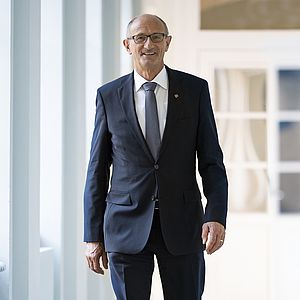
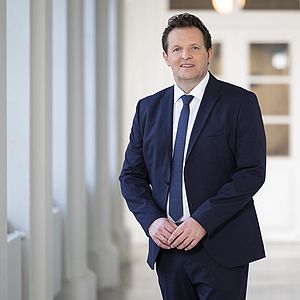
Last year, Innsbruck hosted the celebrations marking the 10th anniversary of EUSALP. Today, Thursday, Tyrol's Governor Anton Mattle attended the EUSALP Annual Forum in Lindau, Bavaria. There, he met with representatives from other Alpine countries and regions, including Bavarian Minister of State Florian Herrmann, German Minister of State at the Federal Foreign Office Florian Hahn, Governor of Vorarlberg Markus Wallner and Governor of South Tyrol Arno Kompatscher, as well as regional ministers, state secretaries and delegations from France, Italy, Liechtenstein and Slovenia.
“The regions are at the heart of our Europe. Through EUSALP, the Alpine regions join forces to give a voice to 80 million people. It is the regions that understand the challenges on the ground and know what people need. The Alpine region has its own unique characteristics and faces challenges that do not stop at national borders. This makes cross-border cooperation all the more important, as well as ensuring that Tyrol's voice is heard in these discussions,” Governor Mattle emphasised.
Tyrol Maintains Pressure for a Shift from Road to Rail
One of the key challenges facing the Alpine countries is the development of sustainable transport and mobility, a goal to which EUSALP has repeatedly committed itself. Governor Mattle is calling for these commitments to be translated into concrete action.
Despite the recent announcement by the Austrian-Italian project company BBT SE that construction of the Brenner Base Tunnel will be delayed due to the implementation of the latest technical standards, Tyrol continues to insist on an effective shift of freight transport from road to rail.
“Every delay to the Brenner Base Tunnel is a setback – there is no point in sugar-coating it. We now finally have the long-awaited clarity on how the project will proceed. As Governor, I call on those responsible to put an end to the secrecy surrounding the project and ensure the Brenner Base Tunnel is completed as quickly as possible. Within EUSALP, I am also making it clear that the necessary access routes and terminal infrastructure cannot be delayed any further. Anyone serious about shifting European transit traffic to rail must ensure that the entire route is operational and has sufficient capacity. This requires joint solutions along the entire Brenner Corridor. Without the expansion of the northern access route to the Brenner Base Tunnel, the shift from road to rail will not succeed,” Governor Mattle warned.
At the preceding EUSALP Mobility Conference in Munich, Bavaria reaffirmed its commitment to expanding the northern access route to the Brenner Base Tunnel. However, decisions and funding commitments on the German side are now needed to move the planning process forward.
Actively Involving Young People
Youth participation has been a key priority since Tyrol's EUSALP Presidency in 2018. This commitment was further strengthened during the Austrian-Liechtenstein Co-Presidency in 2025 and has continued under the Bavarian Presidency in 2026.
The EUSALP Youth Council, comprising 28 young people from across the Alpine region, has become an integral part of EUSALP's structures. During today's General Assembly, the new Youth Council members for the 2026–2027 term were confirmed.
Another important initiative is “Pitch Your Project”, which gives young people the opportunity to present innovative ideas for the Alpine region. This year's final, featuring five selected projects, took place at the EUSALP Annual Forum in Lindau.
Among the five finalists was “TouMove”, an initiative promoting sustainable tourism mobility, with an initial pilot project planned in the Pillersee Valley in the Kitzbühel district.
Another initiative is CIPRA's sustainable mobility programme YOALIN, which provides Interrail passes to encourage young people to explore the Alpine region by train.
Lindau Declaration Strengthens Cooperation
With the adoption of the “Lindau Declaration”, the EUSALP General Assembly reaffirmed its commitment to further developing the EU Strategy for the Alpine Region. The declaration focuses on strengthening EUSALP's political impact, operational implementation and financing.
It is complemented by three so-called “EUSALP Missions”, new instruments designed to advance concrete initiatives in selected strategic areas of importance for the future of the Alpine region.
During the Austrian-Liechtenstein Co-Presidency in 2025, Tyrol took the lead in coordinating the Austrian federal states. Tyrol and Bavaria had already played leading roles in the establishment of EUSALP. Following the launch of the strategy in 2016, Bavaria became the first region to hold the EUSALP Presidency in 2017, followed by Tyrol in 2018.
France will take over the EUSALP Presidency in 2027.